
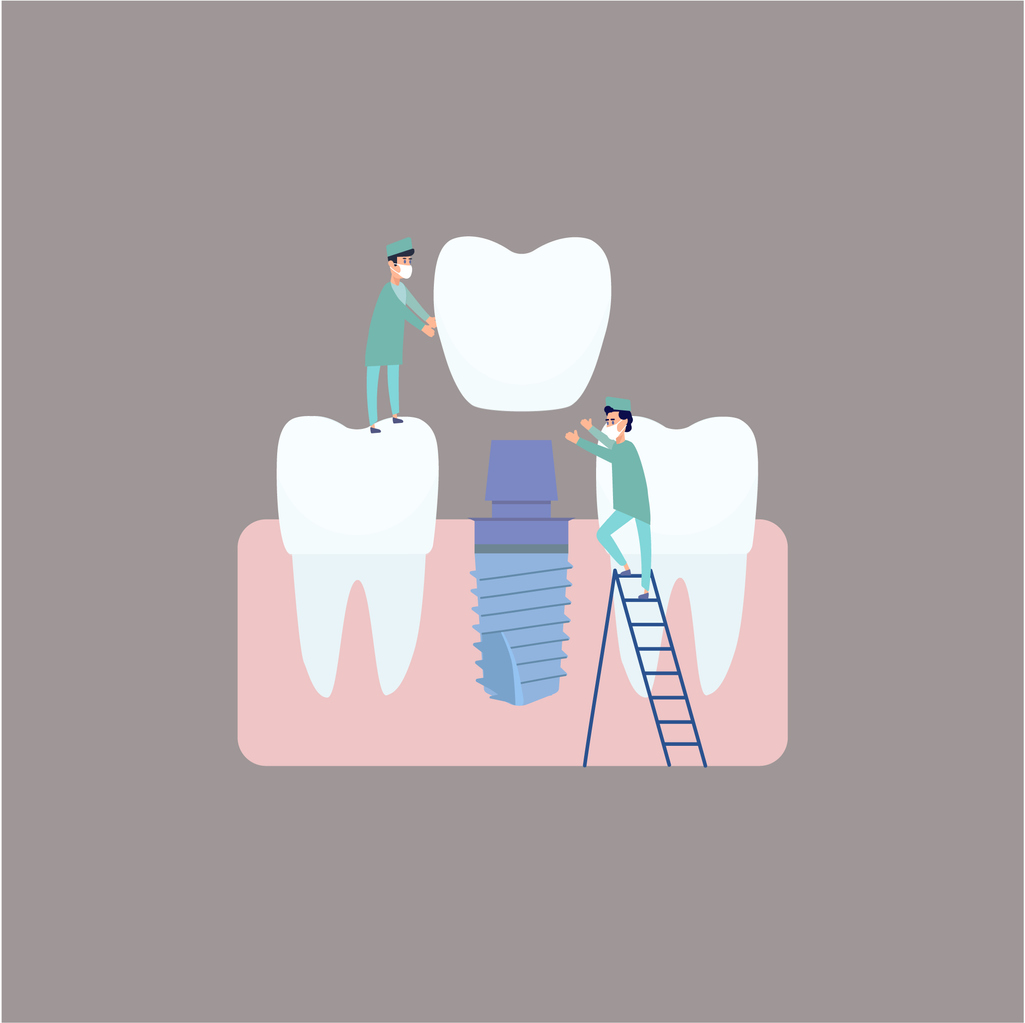
Dental implants are a method of tooth replacement that mimics your natural tooth all the way from the root to the tip. As a result, dental implants offer unmatched support, durability, and longevity. So how many dental implants can one person have?
How Many Dental Implants Can One Person Have?
While most people only have one or two dental implants to replace isolated teeth, there really isn’t a limit on the number of dental implants you can have. If needed, you could technically replace every one of your teeth with dental implants.
The Upside
Dental implants are drilled directly into the jawbone. The jaw is allowed to heal around this post, giving the dental implant the same secure attachment as a natural tooth. In addition to providing that security, the placement of the post also encourages the remodeling of your jaw.
Remodeling is the process of removing old jawbone and replacing it with new, healthy bone. This process happens regularly in response to chewing, and a dental implant encourages that process to continue.
Other methods of tooth replacement do not copy this relationship with the jaw, and the jawbone will begin to atrophy over time in the area where the natural tooth is missing.
The Downside
The long-term benefits of dental implants are difficult to match, but their initial placement does require more of a commitment.
Dental implants have three potential downsides, depending on your own situation.
- Cost: Dental implants are more costly than a dental bridge or dentures
- Additional Work Required: If your jaw bone has atrophied, then you may need a bone graft in addition to the dental implant surgery.
- Time Commitment: Completing a dental implant can take 3-6 months even without bone graft surgery due to the healing time required after the placement of the post.
For most people, these disadvantages are greatly offset by decades of oral health and a well-maintained jaw. However, you should discuss other options with your dentist in Irvine if you have doubts as to whether dental implants are worth it for you. There are hybrid options that may make more sense to you.
The Process of Receiving a Dental Implant
The process of receiving a dental implant can be broken down into three phases.
Phase 1: Placing the Post
Prior to clearing you for a dental implant, your dentist will take x-rays to check that you have enough healthy bone to support a dental implant. If all goes well and you don’t require a bone graft first, then the first appointment will be to place the post.
The post is a piece of medical-grade metal that looks kind of like a screw. While you’re under anesthesia, your oral surgeon will cut into the gum, expose the jawbone, and place the post.
They may also place the abutment at this time, which will eventually connect the post to the crown of your dental implant.
Phase 2: Healing
It generally takes three to six months for your jaw to grow new bone around the post, cementing it in place. The exact time frame will depend on your age, general health, and other lifestyle factors.
While you wait for your jaw to heal, your dentist will observe your progress and prepare for the next stage. They will place the abutment if they haven’t already, and you will have impressions taken. These impressions will be used to make a crown that will fit your mouth perfectly.
Phase 3: Placing the Crown
The crown is the porcelain piece that replicates the visible part of your tooth. Once your jaw has healed, your dentist will put the final crown in place to finish your dental implant.
Considering Hybrid Options
While you can technically replace every single tooth with dental implants in Irvine that option doesn’t work for everyone. If you need extensive repairs, then talk to your dentist about using dental implant anchored bridges and implant anchored dentures.